
Why Product Managers and Sales Team should work together? And how to do it?
A guide to reach a customer-focused product by syncing sales and product teams.

Whether you work in a product or sales team, most probably you’ve heard one of these two short sad stories:
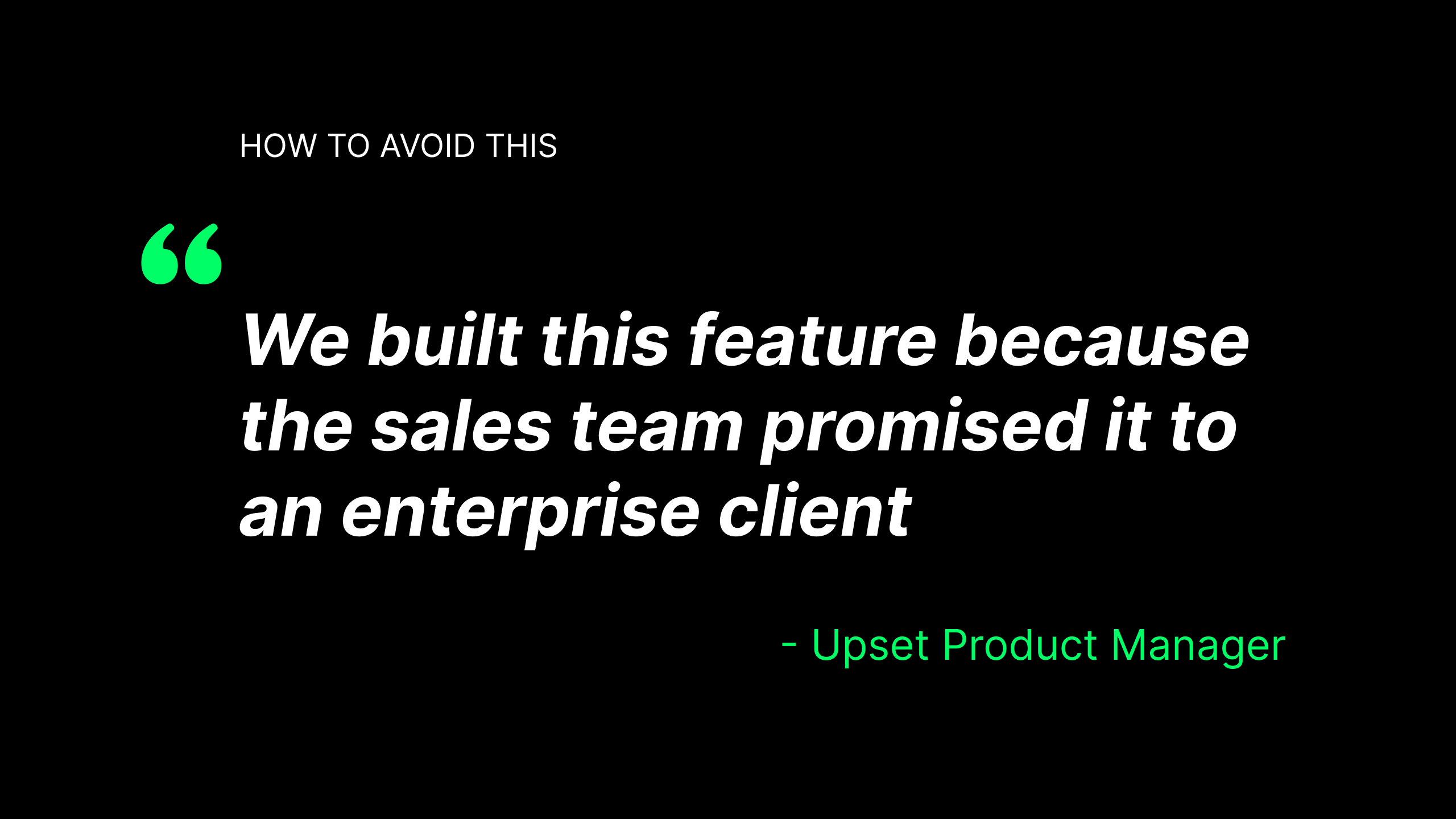
“We built this feature because the sales team promised it to an enterprise client”
- a common mistake that broke PM’s processes for months.“We lose customers because we don’t have this feature; PM team must work on it”
- Even if the PM team is focused on more important features that will bring in more customers.
—
Today, almost all business models focus on growth! 🎯
Even the Product-led-growth companies want to acquire higher ticket accounts. And that puts the sales function in the spotlight as a critical division in any company. Without a successful sales engine, the company cannot sustain its growth and expectations.
It is well known that the workflow between the product team and sales team often creates friction and can result in an unsustainable product roadmap, unrealistic sales proposals, or losing promising business opportunities.
And that slows down the growth engine and disappoints the crew by not achieving the company's strategic goals.
Customer acquisition, product performance, and business overall are all harmed when product and sales are in conflict.
To fix that, both teams must have a middle ground to work like an orchestra, I’m sharing some lessons learned below to reach this sync…
What Product Managers should know about sales team 🤔
Good sales and marketing people are invaluable to the product team, especially for early-stage teams when user data is not statistically significant.
That’s because they….
Know your real Ideal customer profile by heart; they identify the customer who needs your product AND will pay for it, vs. those who won’t.
Have a deep understanding of your product and the competition, with a strategic view of your industry.
Speak the language of your customers and hear their emotions behind the decision to buy.
Pick the right value for each customer by finding the intersection between what the customer wants and what your product does well.
Pitch the product to many prospects and customers every day, and they have a vast quantity of data about who buys and who doesn’t.
My dear PM friend, your salespeople know something you don't! 👨🍳🤵
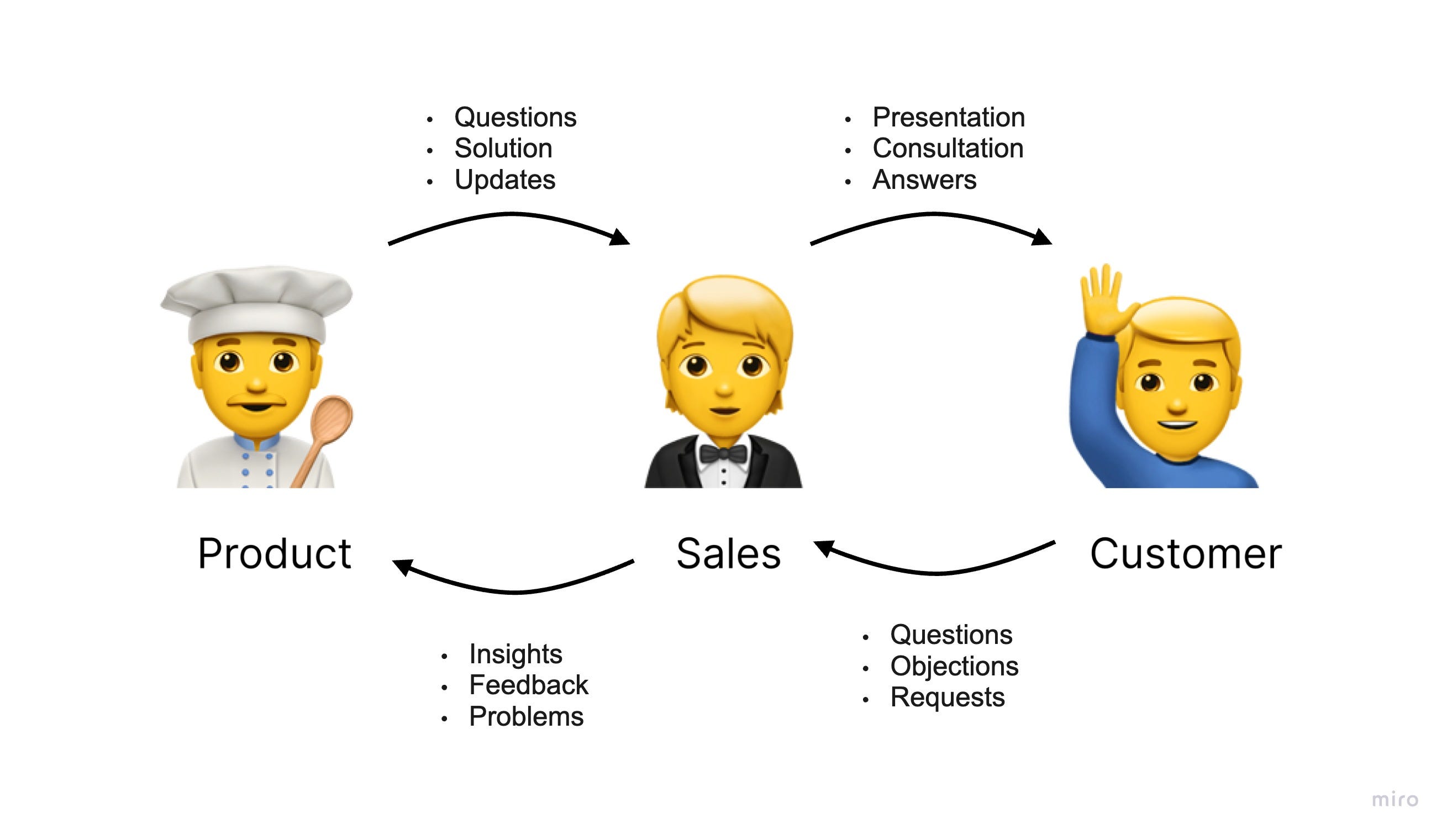
Think of it like a restaurant, the PMs are Chefs, and the sales team are Waiters;
As a chef, you can’t ignore the customer feedback from the waiter just because the customer didn’t fill out the feedback form!
Some customers don’t have time to fill your form; it appears on their facial reaction in the first bite!
The sales team can give you real insights, which can’t be tracked by analytics tools, especially from prospects who are not yet customers. This might lose you some high-ticket deals because their voice is not heard.
6 Lessons learned for my fellow sales and marketing people 😇
On the other side, here are my lessons learned and advice to fellow sales and marketing people:
1. More features don’t mean more sales, it’s not that easy.
Don’t inflate the importance of a customer request who just says: “If you had this feature, we’d spend buy on your product. But you don’t, so we won’t”
To validate the feature request, you have to consider three points to know if it’s worth redirecting resources without sacrificing too much attention to other customers.:
Account size
Impact on your existing customers
Potential opportunities for the company out of working on this request, always raise the question “How will this feature help closing more deals?”,
2. Record the problem, not the solution.
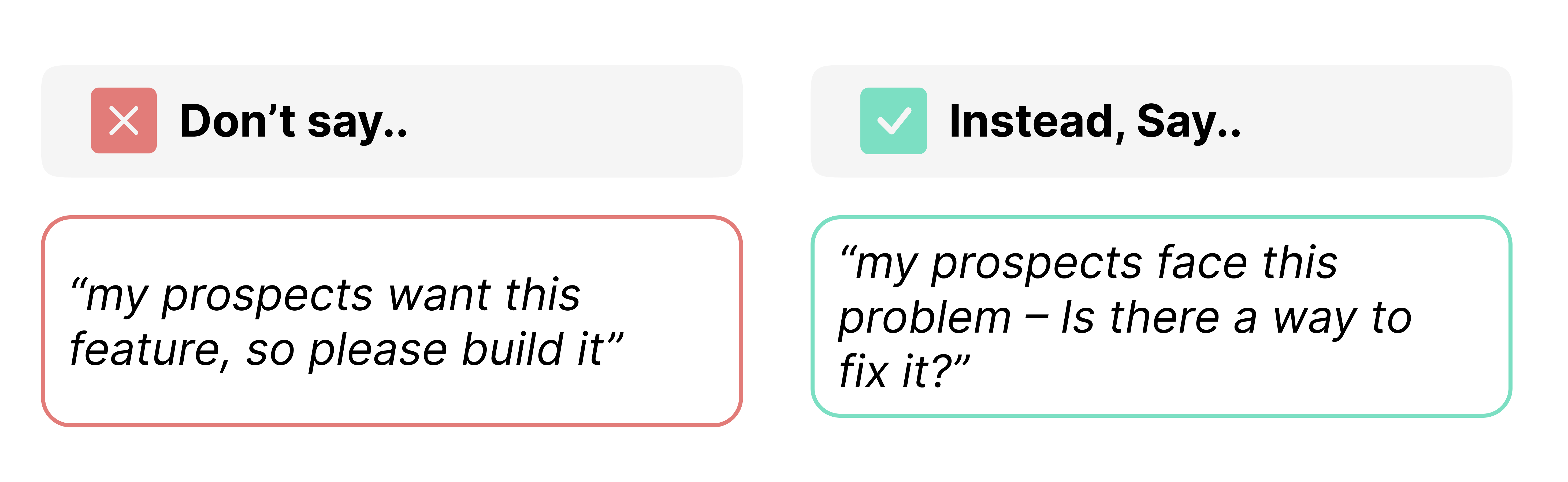
Instead of saying “my customer wants this feature, so please build it” - say “my customers are having this problem – what’s the best way to fix it?” - trust your product team, they might come up with a solution better than the customer suggested.
3. Avoid promises without alignment; it’s a Nightmare!
It’s a nightmare when the sales team promises a customer to build a specific feature without getting back to the product team - just for reaching their target of contracts - this promise can hijack the next months of builds and hinder Product Management’s processes
4. Keep track of which customers requested which features
To get back to them with updates to re-engage and show that their voices are being heard.
5. Product Managers also know something you don’t!
As a sales or a marketing person, your focus usually on the leads and prospects you want to convert, but after the conversion, the product managers and customer success teams are the best ones who know about the existing customers. which make them know something you don’t.
6. Trust your Product Team, they also want to sell the product
I know that your bread & butter is from closing more deals, and that makes you feel stressed about product limitations, however, the product team also cares about selling the product, your both roles are so close in end result, which is getting more customers by offering the right solution to their need.
So, How to reach this harmony between PMs and sales 🤝
I’m listing below some ideas I’ve seen before with a positive impact on the sales funnel, I personally contributed to some of them in my career, and other ideas I found useful from other teams that I wish to do
Monthly two-way meeting that includes:
1) Recent and upcoming product updates
2) Insights from the sales team, this meeting should be led by a moderator who has an understanding of both sides.Shared product roadmap board to make the decision-making process and prioritization more visible and aligned with the sales team.
Agree on the best ways to submit customer feedback and hold sales team accountable for submission using easy flow, and the product team for replying to each submission with continuously updated status.
💡 Prospect requests should be accompanied the importance of the request, whether it’s nice to have, a competition edge, or a deal-breaker.Establish early communication and align on the strategy toward a common goal such as increasing revenue from existing accounts and client base.
Slack channel for product ideas so that all teams can add their continuous product ideas, and it goes automatically to the product team’s roadmap management platform into “Ideas stock” stage.
Product managers should periodically sit in on sales calls to hear the users’ voice first hand, I recommend targeting calls with unique edge use cases, stretching and pushing the boundaries of the product.
As a bottom line, The alliance between sales and product teams is not a luxury if you want a customer-focused product.
Do you have any other ideas to make product and sales teams work better together? Leave a comment with it to benefit other teams..
—